Conversion to Buddhism
Early growth and political centralization, c. 200 bce–1255 ce
Expansion of Buddhism preceded political unification; many of the areas embraced by the new religion were still ruled by a multitude of chiefs. The ruler of Anuradhapura, Duttagamani Abhaya (reigned 161–137 bce), was preeminent among these chiefs, and, as Buddhism spread, the Anuradhapura kingdom extended its political control over the rest of Sri Lanka.
The Anuradhapura period
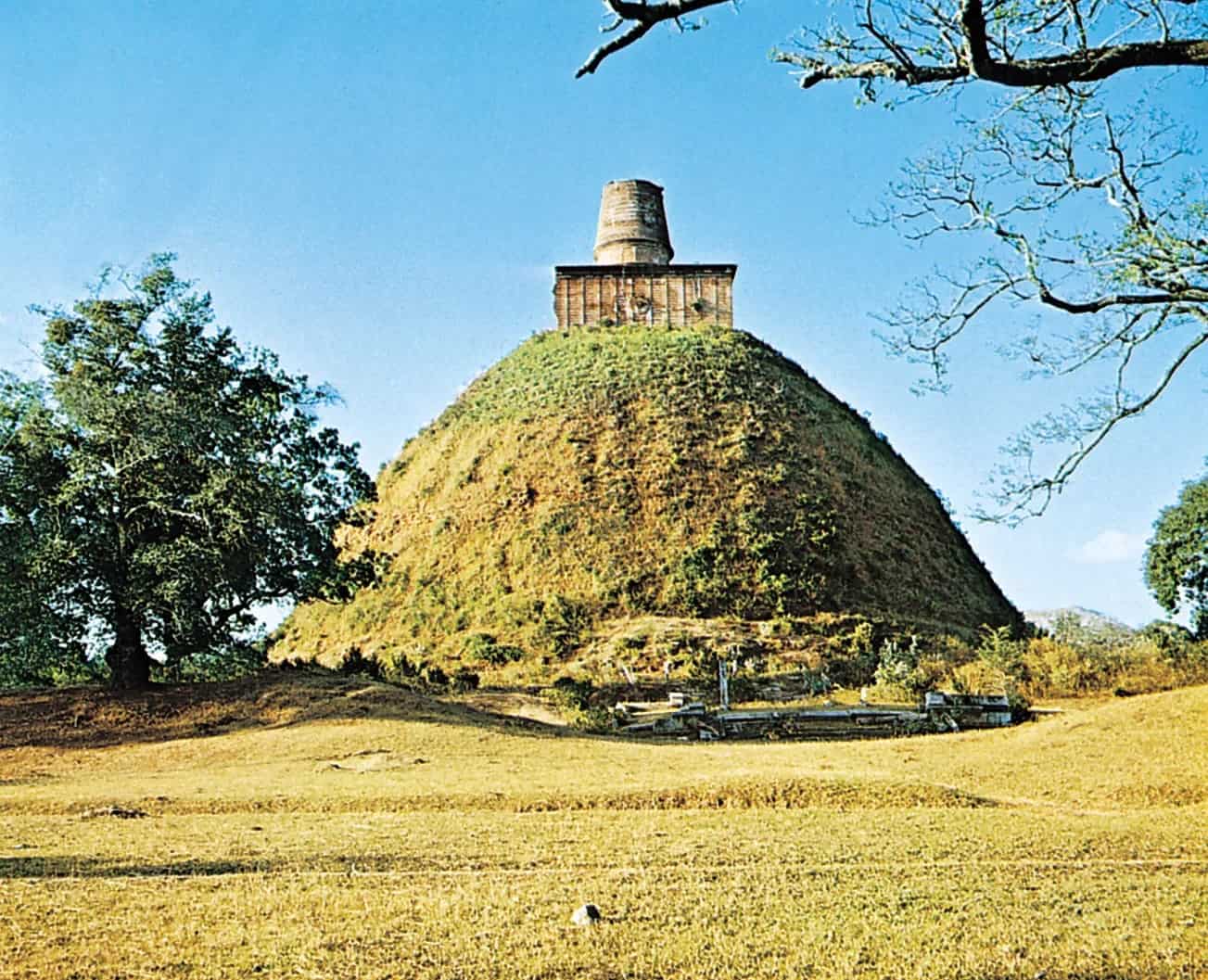 The Vijaya dynasty of kings continued, with brief interruptions, until 65 ce, when Vasabha, a member of the Lambakanna royal family, founded the Lambakanna dynasty. The Lambakannas ruled for about four centuries. Their most noteworthy king was Mahasena (reigned 276–303), who constructed many major irrigation systems and championed heterodox Buddhist sects.
 A Pandyan invasion from southern India put an end to this dynasty and, briefly, to Sinhalese rule in 432. Dhatusena (reigned 459–477) defeated the Pandyas and reestablished Sinhalese rule with the line of Moriya kings. His son Kashyapa I (reigned 477–495) moved the capital from Anuradhapura to the rock fortress of Sigiriya. After Kashyapa’s dethronement the capital was returned to Anuradhapura.
From the 7th century there was an increase in the involvement of south Indian powers in the island’s politics and in the presence of Tamil mercenaries in and around the capital. Manavamma, a Sinhalese royal fugitive, was placed on the throne in 684 with the support of the Pallava rulers of south India.
Manavamma founded the second Lambakanna dynasty, which reigned in Anuradhapura for about 400 years. The dynasty produced a number of distinguished kings, who consolidated and extended Sinhalese political power. During this period, Sinhalese involvement with southern India was even closer. Sinhalese kings were drawn into the dynastic battles between the Pandyas, Pallavas, and Colas. Invasions from south India to Sri Lanka and retaliatory raids were a recurrent phenomenon. In the 10th century the island’s political and military power weakened because of regional particularism and internecine warfare; the Colas—hostile because of the Sinhalese alliance with Pandya—attacked and occupied the Sinhalese kingdom in 993 and annexed Rajarata (in the north-central region of Sri Lanka) as a province of the Cola empire. The conquest was completed in 1017, when the Colas seized the southern province of Ruhuna.
The Polonnaruwa period
The Colas occupied Sri Lanka until 1070, when Vijayabahu liberated the island and reestablished Sinhalese power. He shifted the capital eastward to Polonnaruwa, a city that was easier to defend against south Indian attacks and that controlled the route to Ruhuna. The capital remained there for some 150 years. The most colorful king of the Polonnaruwa period was Parakramabahu I (reigned 1153–86), under whom the kingdom enjoyed its greatest prosperity. He followed a strong foreign policy, dispatching a punitive naval expedition to Myanmar (Burma) and sending the army to invade the Pandyan kingdom; however, these initiatives achieved no permanent success. After Parakramabahu I the throne passed to the Kalinga dynasty, and the influence of south India increased. Nissankamalla (reigned c. 1186–96) was the last effective ruler of this period. The last Polonnaruwa king was Magha (reigned 1215–36), an adventurer from south India who seized power and ruled with severity.
Government and society
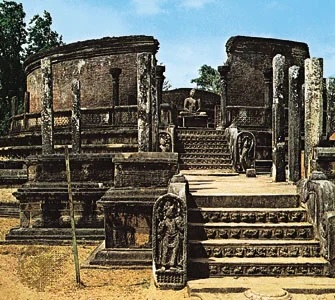 Kingship was the unifying political institution in the Anuradhapura and Polonnaruwa periods, a symbol of the aims and achievements of the Sinhalese people. The kingship was essentially Brahmanic (hereditary within the priestly social class), with strong Buddhist influences; all the kings were practicing Buddhists and patrons of Buddhist institutions. The support and blessing of the clergy, moreover, were perceived as essential to a peaceful and continuous reign. This connection between kingship and Buddhism enabled Buddhism to flourish. Kings built, maintained, and endowed many shrines and monasteries, and they intervened to establish order and prevent schism within the Buddhist community. Nobles and commoners too were lavish in their support, and thus Buddhist institutions prospered. Many beautiful temples were built with finely carved sculpture, and monasteries thrived as centers of learning in the Pali and Sinhalese languages and in Buddhist philosophy.
The king was supported by an inner administrative hierarchy consisting of members of his family and influential nobles. The yuvaraja, the king’s chosen heir to the throne, was given responsible office. The army was the major prop of royal absolutism, and the senapati, or commander in chief, was the king’s closest counselor and confidant.
Sinhalese society was segmented into social classes—castes—each of which performed a particular occupation. (The caste system in Sri Lanka, however, was not as rigid as its counterpart in India.) The Govi, or cultivators, made up the highest caste in Sri Lanka, but many other castes also engaged in farming. Administrative officials were drawn from the Govi caste, which was stratified into chiefs, titled men, and peasants. Chiefs were important supporters of royal absolutism and helped administer the government. Nonagricultural people, the Hina, were considered of lower rank and were divided into occupational groups. These caste groups were endogamous; each lived in its own section, along particular streets. Castes were stratified in terms of status, with the lowest on the scale—the candala—performing the most menial of jobs.
The advent and impact of irrigation
The Sinhalese civilization was hydraulic, based on the storage and use of water for the regular cultivation of wet fields. The early Indo-Aryan settlers cultivated rice and settled along river valleys and other suitable lands. They began with simple schemes for damming rivers and storing water below them. Small systems for storing water in reservoirs by tapping seasonal streams later became a feature of nearly every village; these waterworks probably were managed communally by the landowners of the village. With the increase in royal power, the attraction of greater revenue through greater production made kings play an active role in the construction of large-scale irrigation schemes. Beginning about the 1st century ce during the reign of King Vasabha, large perennial rivers were blocked with massive earthen dams to create colossal reservoirs. With increasingly sophisticated irrigation technology, water from these reservoirs was delivered through canals to distant fields and through underground channels to the capital city.
Further technological progress was achieved in the 3rd century during the reign of King Mahasena; a number of storage tanks and canals are attributed to him, the most outstanding of which is the Minneriya tank and its feeder canals. The construction and maintenance of monumental irrigation works became a regular preoccupation of kings. Reservoirs and canals studded the northern and north-central plains, tapping every source of water. Among the most noteworthy was the magnificent Parakrama Samudra in Polonnaruwa, the crowning glory of Parakramabahu I’s reign, with a storage area of more than 5,000 acres (2,000 hectares) for the irrigation of 18,000 acres (7,300 hectares).
Operation of the large works demanded a great deal of coordination and central control; mobilization of labor and technical skill was required at the construction stage, and bureaucratic machinery was essential to keeping the system in repair. Among the primary functions of the central administration was the enforcement of regulations to coordinate cultivation of irrigated plots, to control the flow of water, and to collect water dues from the irrigation operators. Such effective and efficient water management led to increased productivity, which ultimately increased the power of the king.
Many medium and small irrigation works were, however, initiated and managed by regional and village authorities, who became important props of royal authority. When rights to revenue were devolved to these local notables, a feudal system began to emerge, with feudal relations proliferating especially rapidly after 1200.
A grain tax, the water dues, and trade in surplus grain were major sources of the king’s revenue. They sustained strong political and military power for more than a millennium and enabled the dispatch of expeditions abroad. Increased revenue also made possible widespread religious construction, which, along with remarkable accomplishments in the plastic arts and irrigation, was a hallmark of the reign of Parakramabahu I.
The fall of Polonnaruwa
When Parakramabahu I died in 1186, the throne passed to the non-Sinhalese Kalinga dynasty—to Nissankamalla, brother of Parakramabahu I’s Kalinga queen. Following the death of Nissankamalla in 1196, the Polonnaruwa kingdom was weakened by a succession of ineffective rulers. Non-Sinhalese factions such as the Kalingas and Pandyas of India gained power in Sri Lanka as a result of dynastic marriages with south Indian royalty; conflict between these factions was common. South Indian notables occupied positions of influence under Kalinga kings, and their power was buttressed by mercenaries of various origins. In 1214 Magha of the Kalingas invaded Sri Lanka with the help of thousands of such mercenaries, and he took control of the whole island. Magha’s rule, a veritable reign of terror, lasted until 1255 and was marked by bold disregard of traditional authority and of established religion. Polonnaruwa itself fell into the hands of non-Sinhalese elements, each vying with the others for power and office.
Drift to the southwest (1255–1505)
Political changes
With central control from Polonnaruwa further weakened after the death of Magha and ruling kings of foreign descent being unable to exercise political control over outlying provinces, members of the traditional ruling class gravitated to centers of Sinhalese power located away from the reach of Polonnaruwa. Such centers generally lay to the southwest, in strategic, relatively inaccessible areas that were defensible from attack. Dakkhinadesa, a region to the west of the central mountains, was one such area. The first site chosen to reestablish the Sinhalese kingdom, however, was Dambadeniya, about 70 miles (110 km) southwest of Polonnaruwa; Vijayabahu III (reigned 1232–36) and his three successors (all part of the Dambadeniya dynasty) ruled from there. They made occasional successful raids into Rajarata to attack the Kalinga and Tamil rulers but did not attempt to reoccupy Polonnaruwa. Under Parakramabahu II (reigned 1236–70) the Dambadeniya kingdom achieved great power; it was able to expel the Kalingas from the island with Pandyan help and to repel an invasion by Malays from Southeast Asia.
Bhuvanaika Bahu I (reigned 1272–84) moved the capital northward to Yapahuwa, an isolated rock, which he strengthened with ramparts and trenches. His successors moved the capital southward again to Kurunegala and then to Gampola toward the Central Highlands about 1344. Meanwhile, the Alagakonara, a powerful Sinhalese family, attained a strong position at Rayigama, near the west coast; the Muslim traveler Ibn Baṭṭūṭah, who visited Sri Lanka in 1344, referred to one of the Alagakonaras as a sultan named Alkonar. In 1412 the capital was taken by Parakramabahu VI (reigned 1412–67) to Kotte, a few miles from present-day Colombo; for a brief period under this king, the Kotte kingdom expanded and acquired sovereignty over the island.
The effective control of the Sinhalese kings from roughly 1200 to 1505 generally did not extend far beyond their capital cities, though extravagant claims were often made to the contrary. Taking advantage of the collapse of the Polonnaruwa kingdom after Magha’s fall and of the drift of Sinhalese political authority to the southwest, a south Indian dynasty called the Arya Chakaravartis seized power in the north. By the beginning of the 14th century, it had founded a Tamil kingdom, its capital at Nallur in the Jaffna Peninsula. The kingdom of Jaffna soon expanded southward, initiating a tradition of conflict with the Sinhalese, though Rajarata—by then a largely depopulated country—existed as a buffer between them.
A politically divided and weakened island was an enticement to foreign invasions in the 13th, 14th, and 15th centuries. The second Pandyan empire was constantly interfering in the affairs of Sri Lanka; its forces often supported rival claimants to power and took back considerable sums in payment and booty—including on one occasion the Tooth Relic, venerated as a tooth of the Buddha and a sacred symbol of Sinhalese sovereignty. The Malay ruler Chandrabhanu invaded the island in 1247 and 1258, for reasons not altogether clear. Forces of the Vijayanagar empire in south India invaded Sri Lanka on a few occasions in the 15th century, and for a brief period the Jaffna kingdom became its tributary. Zheng He, the great admiral of the third Ming emperor of China, led a series of expeditions into the Indian Ocean. On his first expedition (1405–07) Zheng landed in Sri Lanka but withdrew hastily; he returned in 1411, defeated the ruler Vira Alakeshvara, and took him and his minister captive to China.
Social and economic changes
The drift of Sinhalese political power to the southwest following the collapse of Polonnaruwa in the mid-13th century had drastic social and economic consequences. Population gradually shifted in the direction to which the capital was shifting; this led to neglect of the interconnected systems of water storage. The once-flourishing Rajarata became a devastated ruin of depopulated villages, overgrown jungle, and dried-up tank beds as the centers of Sinhalese population arose in the monsoon-watered lands of the south, the southwest, and the Central Highlands. Consequent changes in agricultural techniques, land use, ownership patterns, and ways of life followed swiftly.
Collapse of the Dry Zone civilization
A combination of factors brought about the demise of the hydraulic civilization that had once flourished in Sri Lanka’s Dry Zone—primarily in the northern and eastern parts of the island. Most notable of these factors were the depletion of the treasury and the failure of the irrigation system. Under Parakramabahu I the pursuit of an active foreign policy and the many wars it involved were serious burdens on the treasury; indeed, the maintenance of a strong standing army and navy was a great expense for all the Polonnaruwa kings. The construction and upkeep of the magnificent Buddhist monuments of the Polonnaruwa period also likely strained Sri Lanka’s economy.
The most visible sign of the collapse of the hydraulic civilization was the breakdown of its elaborate system of irrigation, on which agricultural productivity depended. The operation of the system was disrupted when the traditional Sinhalese aristocracy was eased out of authority. In place of the aristocracy, mercenary military officers were dispersed throughout the country to uphold law and order and to assume administrative functions. Meanwhile, the Sinhalese noble families withdrew from Rajarata to the courts of Sinhalese leaders who had set themselves up in other parts of the country. Thus, the managerial network that had maintained the agricultural and irrigation systems disappeared, and operations broke down. The new military administrators had neither the capacity nor the interest to maintain the irrigation system. Many of the larger reservoirs were breached, and smaller tanks that were fed by excess waters from them also lost their supply. (Some of the destruction was deliberate, caused by rival armies to flood a part of the country.) The amount of water stored for cultivation was reduced, which in turn reduced the area of cultivable land. Agriculture became dependent on the uncertain rains, and the people waged a losing battle against the advancing forest. The country could not maintain its previous population density. Consequently, people started following their leaders toward areas with greater rainfall.
New cultivation techniques
Population centers formed in the hospitable areas of the south, the southwest, and the Central Highlands. The marked difference in climate and topography required new techniques of cultivation. Though rice cultivation continued as an important activity, paddies had to be terraced, and the flow of water had to be regulated to suit the undulating land. These changes in agricultural methods demanded a different irrigation system that could not attempt to rival the scale of the Dry Zone schemes. Other grains amenable to the highland climate were grown as a supplement to rice, and garden cultivation—helped by excessive rains—became significant. Coconut, easily grown in the wetlands of the coast and the highlands, became an important food. Because of the abundance of land, shifting agriculture was practiced along the slopes of the hills. Farming was generally of a subsistence character.
Foreign trade
With the decline in agricultural productivity, trade became an important source of state revenue, and spices were the most important exports. Cinnamon, indigenous to the southwestern forests, became an export commodity in the 14th century, while pepper and other spices increased in export value. Trade in these items was monopolized by the royalty; kings entered into contracts with foreign merchants, fixed prices, and received the revenue. The people of the land were not involved in any aspect of this trade, nor did they benefit directly from it. Colombo and Galle became prominent ports of external trade; smaller ports in the southwest became centers of coastal and Indian trade. Almost all the traders were foreigners who settled in colonies in and around these ports.
The major international traders were the Arabs, who had been attracted by the luxury products of Sri Lanka since about the 10th century. Arabs were interested in cinnamon and spices, which began to fetch good prices in Western markets. In 1283 the Sinhalese king Bhuvanaika Bahu I sent an embassy to the Mamlūk sultan of Egypt to seek a commercial agreement.
Land control
Some significant changes took place in land relations and land control during this period. The grain tax—payable directly to the state in cash or in kind—that had been central to the land revenue system in the northern regions diminished in importance as the Sinhalese relocated southward. In part this was attributable to a breakdown in the administration; kings could no longer maintain a specialized machinery for the assessment and collection of the grain tax and other land taxes. The tax system therefore was replaced by a system of service tenure, under which a large proportion of the land was held on the basis of an obligation of service to the state. This service could be used by the state to various ends, including the cultivation of royal lands, the payment of officials (through assignment of service), and the maintenance of public utilities. Taxpaying lands and service lands were gradually merged. Each plot had a fixed service attached to it, and anyone who enjoyed that land had to perform a particular service. These services were extensively assigned to village and regional notables in order to attract their support. The commutation of tax for service also meant a decrease in the circulation of money; copper coins replaced those of gold and silver.
Cities
Capitals were now selected (and constructed) for their military defensibility; they were relatively small, located in difficult terrain, and somewhat isolated from populated areas. Communications between settlements were difficult, and excessive mobility was discouraged for military reasons. Moreover, the subsistence character of farming curtailed internal trade. Consequently, cities were not centers of economic life as in the past; they no longer attracted large groups of artisans, merchants, servants, and others dependent on the ruling groups. Rather, they were primarily of military importance.
Religious and ethnolinguistic changes
The Buddhist monasteries and temples had been beneficiaries of the hydraulic system of the Dry Zone. Lands, taxes, and water dues were assigned to temples. In addition, the temples had accumulated assets by making their own investments in land and by excavating their own tanks. With the changes in irrigation and agricultural practices, however, these sources of revenue declined. Kings continued their patronage of Buddhism, but their wealth and power diminished. Nobles and commoners were not rich enough to make substantial benefactions. The great monasteries of Anuradhapura and Polonnaruwa were disbanded. New institutions arose in and around the capitals of Dambadeniya, Kurunegala, Gampola, Rayigama, and Kotte, but they were not of the size or stature of their predecessors in the Dry Zone. The absence of strong political authority also affected the unity and coherence of the monastic organization itself. In this period there was a greater incidence of indiscipline and schism than before, and kings were called upon frequently to purge the sangha (monkhood) of undesirable elements.
The influence of Hinduism on Buddhist institutions, theology, and ways of life was more marked during this period as well. The ruling classes mixed extensively with Tamil royal and noble families, and there was an influx of Brahmans from south India to all parts of the country. Vedic (pertaining to the religion that predated Hinduism in the Indian subcontinent) and post-Vedic gods now assumed importance and were worshipped by kings and commoners in elaborate festivals. For instance, the worship of entities called devas became a prominent feature of popular Buddhism.
One of the consequences of the drift of the Sinhalese kingdoms to the southwest and the establishment of the Tamil kingdom in the Jaffna Peninsula to the north was the division of the island into two ethnolinguistic areas. Before this division occurred, Tamil settlements were interspersed among the Sinhalese throughout the island. Then the northern and eastern areas became predominantly Tamil; their numbers were strengthened by fresh migrations from south India after the collapse of the Pandyan kingdom in the 14th century.
Jaffna, as the capital of the Tamil kingdom, became the seat of Tamil Hindu culture, with a social organization somewhat akin to that of the Tamil districts of south India. The caste of landowning cultivators—the Vellala—formed the pivot of the social structure, and its members held both political and economic power. A number of lesser castes stood in varying degrees of service relationship to the Vellala. Hindu institutions were supported by the kings and the people and were strengthened by the influx of Brahmans. Brahmanic temples sprang up in many parts of Jaffna, and rituals and sessions of public worship were held regularly. The Tamil language established deep roots in the island and became one of Sri Lanka’s indigenous languages. Tamil literature was fostered by the support of the Jaffna kings and was enriched by constant contact with south India, yet it developed an individuality in idiom and speech and acquired some linguistic characteristics that distinguished it from its south Indian parent.
The Portuguese in Sri Lanka (1505–1658)
The expansion of Portuguese control
By about 1500 trade in the Indian Ocean was dominated by Arab, Indian, Malay, and Chinese merchants, who together used various seafaring craft to transport a spectrum of cargo, from spices to elephants. In the early 16th century a new force, in the form of Portuguese ships with mounted guns, arrived in the ocean. These vessels, with their firepower and capacity for high speeds, helped implement a policy of control that began to undermine the region’s long-standing, relatively open trade competition.
In 1505 a Portuguese fleet commanded by Lourenço de Almeida was blown into Colombo by adverse winds. Almeida received a friendly audience from the king of Kotte, Vira Parakrama Bahu, and was favorably impressed with the commercial and strategic value of the island. The Portuguese soon returned and established a regular and formal contact with Kotte. In 1518 they were permitted to build a fort at Colombo and were given trading concessions.
In 1521 three sons of Vijayabahu, the reigning king of Kotte, put their father to death and partitioned the kingdom among themselves. The eldest of the brothers, Bhuvanaika Bahu, ruled at Kotte, and the two others set up independent kingdoms at Sitawake and Rayigama. Mayadunne, the king of Sitawake, was an ambitious and able ruler who sought to expand his frontiers at the expense of his brother at Kotte. Bhuvanaika Bahu could not resist the temptation of seeking Portuguese assistance, and the Portuguese were eager to help him. The more he was pressed by Mayadunne, the greater was his reliance on Portuguese reinforcement. Bhuvanaika Bahu defended his kingdom against Mayadunne, who in turn allied himself with an inveterate enemy of the Europeans, the zamorin (member of the Zamorin dynasty) of Kozhikode (also known as Calicut, in southwestern India).
Bhuvanaika Bahu was succeeded by his grandson Prince Dharmapala, who was even more dependent on Portuguese support. An agreement between Bhuvanaika Bahu and the king of Portugal in 1543 had guaranteed the protection of the prince on the throne and the defense of the kingdom; in return the Portuguese were to be confirmed in all their privileges and were to receive a tribute of cinnamon. The prince was educated by members of the Franciscan order of the Roman Catholic Church; in 1556 or 1557, when his conversion to Christianity was announced, he became easily controlled by the Portuguese. Dharmapala’s conversion undermined the Kotte dynasty in the eyes of the people. Mayadunne’s wars of aggression were now transformed into a struggle against Portuguese influence and interests in the island, and he annexed a large part of the Kotte kingdom. After Mayadunne’s death, his son Rajasinha continued these wars successfully on land, though, like his father, he had no way of combating Portuguese sea power.
At the death of Rajasinha in 1593, the Sitawake kingdom disintegrated for want of a strong successor. The Portuguese captured much of the land of the Kotte royal lineage and emerged as a strong power on the island. In 1580 Dharmapala had been persuaded to deed his kingdom to the Portuguese, and when he died in 1597 they took formal possession of it. Meanwhile, a Portuguese expedition to Jaffna in 1560 had no lasting success. A second invasion of 1591, undertaken at the instigation of Christian missionaries, succeeded in installing a Portuguese protégé. Continued unrest and succession disputes prompted the Portuguese to undertake a third expedition, and the kingdom of Jaffna was annexed in 1619.
The Portuguese now controlled a considerable part of the island, except the Central Highlands and eastern coast, where an able Sinhalese nobleman, Vimala Dharma Surya, had established himself and consolidated his authority. The Portuguese were eager to establish hegemony over the entire island, and their attempts to do so led to protracted warfare. The Portuguese expanded to the lower reaches of the Central Highlands and annexed the east coast ports of Trincomalee and Batticaloa.
Although Portuguese possessions in Sri Lanka became a part of the Portuguese Estado da India (State of India), the administrative structure of the Kotte kingdom was retained. The island was divided into four dissavanis, or provinces, each headed by a dissava. Other territorial subdivisions also were retained. Portuguese held the highest offices, though local officials came from the Sinhalese nobility loyal to the Portuguese.
The Sinhalese system of service tenure was maintained, and it was used extensively to secure the essential produce of the land, such as cinnamon and elephants. The caste system remained intact, and all obligations that had been due to the sovereign now accrued to the Portuguese state. The payment in land to officials also was continued and was extended to Portuguese officials as well.
The Portuguese generally lacked a proper understanding of traditional Sinhalese social and economic structure, and excessive demands put upon it led to hardship and popular hostility. Cinnamon and elephants became articles of Portuguese monopoly; they provided good profits, as did the trade in pepper and betel nuts (areca nuts). Portuguese officials compiled a tombo, or land register, to provide a detailed statement of landholding, crops grown, tax obligations, and nature of ownership.
The period of Portuguese influence was marked by intense Roman Catholic missionary activity. Franciscans established centers in the country from 1543 onward. Jesuits were active in the north. Toward the end of the century, Dominicans and Augustinians arrived. With the conversion of Dharmapala, many members of the Sinhalese nobility followed suit. Dharmapala endowed missionary orders lavishly, often from the properties of Buddhist and Hindu temples. After the Portuguese secured control of Sri Lanka, they used their extensive powers of patronage and preference in appointments to promote Christianity. Members of the landed aristocracy embraced Christianity and took Portuguese surnames at baptism. Many coastal communities underwent mass conversion, particularly Jaffna, Mannar, and the fishing communities north of Colombo. Catholic churches with schools attached to them served Catholic communities all over the country. The Portuguese language spread extensively, and the upper classes quickly gained proficiency in it.
Kandy and its struggle with European powers
Rajasinha occupied Kandy, a Sinhalese kingdom in the Central Highlands, about 1580, and its ruler took refuge with the Portuguese. In 1591 the Portuguese launched an expedition to Kandy to enthrone Dom Philip, an heir of the dispossessed ruler. They were accompanied by an ambitious and distinguished Sinhalese military nobleman, Konnappu Bandara. Dom Philip was installed as king but died under suspicious circumstances, and Konnappu Bandara enthroned himself, proclaiming independence from the Portuguese and taking the regnal name of Vimala Dharma Surya. The demise of Sitawake after Rajasinha’s death left Kandy the only independent Sinhalese kingdom.
The Portuguese launched another expedition to Kandy, in 1594, under Gen. Pedro Lopes de Sousa, planning to enthrone Dona Catherina, a baptized Sinhalese noblewoman. Popular hostility soon built up toward the seemingly ever-present Portuguese troops. Vimala Dharma Surya took advantage of the agitated atmosphere and, making use of guerrilla warfare tactics, routed the Portuguese army in 1594. He captured Dona Catherina, made her his queen, and legitimized and consolidated his rule. He expanded into the old Sitawake kingdom and emerged as the leader of resistance to the Portuguese. The Portuguese made a few subsequent attempts to subjugate Kandy, but none were successful.
Vimala Dharma Surya realized that without sea power he could not drive the Portuguese out of Sri Lanka. He saw the arrival of the Dutch as an excellent opportunity to gain naval support against his adversaries. The first Dutch envoy, Joris van Spilbergen, met the king in July 1602 and made lavish promises of military assistance. A few months later another Dutch official, Sebald de Weert, arrived with a concrete offer of help and, in view of favorable terms offered by the king, decided to launch a joint attack on the Portuguese. However, a misunderstanding between the king and de Weert caused an altercation between the Kandyans and the Dutch, and de Weert and his men were killed.
King Senarath (Senarat) succeeded to the Kandyan throne in 1604 and continued to solicit Dutch support. In 1612 a Dutch envoy, Marcelis Boschouwer, concluded a treaty with Senarath. The king granted the Dutch extensive commercial concessions and a harbor for settlement on the east coast in return for a promise of armed assistance against Portuguese attack. The Dutch ultimately were unable to offer adequate assistance, and so Senarath turned to the Danes. By the time a Danish expedition arrived in May 1620, however, Senarath had concluded a peace agreement with the Portuguese. The truce was short-lived, and in 1630 the Kandyans, taking the offensive, invaded Portuguese territory and laid siege to Colombo and Galle. Again the absence of sea power proved a handicap, and another peace was concluded in 1634.
In 1635 Senarath was succeeded by his son Rajasinha II. The Dutch were now firmly established in Batavia (now Jakarta) in Java and were developing their trade in southern Asia. The king sent emissaries to meet the admiral of the Dutch fleet, Adam Westerwolt, who was then blockading Goa, India. The fleet came to Sri Lanka and captured Batticaloa. Westerwolt and Rajasinha II concluded a treaty on May 23, 1638, giving the Dutch a monopoly on most of Sri Lanka’s cinnamon and a repayment in merchandise for expenses incurred in assisting the king. In May 1639 the Dutch fleet captured Trincomalee, and in February 1640 the Dutch and the Kandyans combined to take Negombo. But differences arose over the occupation of captured forts. The Dutch refused to give Trincomalee and Batticaloa to the king until their expenses were paid in full, and Rajasinha II realized that what the Dutch really wanted was to replace the Portuguese as the rulers of the coast.
Rajasinha II nevertheless continued to work with the Dutch to expel the Portuguese. In March 1640 Galle was taken, but the progress of the allies soon was temporarily halted by a truce declared in Europe between the Dutch Republic and Spain, which at that time ruled Portugal and its overseas possessions. In 1645 the boundaries between Portuguese and Dutch territory in Sri Lanka were demarcated. Jan Thijssen was appointed the first Dutch governor.
The Dutch peace with the Portuguese and occupation of captured territory incensed the Kandyan king and strained relations between him and the Dutch. In May 1645 war broke out between them. Though Rajasinha II could not conquer the occupied lands, he made them worthless to the Dutch by destroying crops and depopulating villages. The Dutch then realized the advantage of coming to terms with the king. In 1649 a revised treaty was signed. The Dutch agreed to hand over some of the lands but again delayed it because of the immense debt the king was held to owe them.
The Dutch truce with the Portuguese expired in 1652, leaving the Dutch free to resume the war. Kandyans launched attacks on Portuguese positions in the interior provinces of Seven Korales, Four Korales, and Sabaragamuwa and pushed the Portuguese back to their coastal strongholds, despite fierce resistance. Rajasinha II was anxious to attack Colombo, but he was put off by the Dutch. He tried to secure guarantees from them for the return of that city after its conquest, and the Dutch made lavish promises. In August 1655 the Dutch were strengthened by the arrival of a large fleet under Gen. Gerard Hulft, and they laid siege to Colombo by sea and by land. In May 1656 the Portuguese surrendered the city to the Dutch, who shut the Kandyans out of its gates. Requests for the cession of Colombo met with evasive replies. Highly incensed, Rajasinha II destroyed the lands around Colombo, removed its inhabitants, and withdrew to his mountain kingdom.
After a brief respite the Dutch resumed the expulsion of the Portuguese from Sri Lanka. Adm. Ryckloff van Goens arrived with a fleet to continue the attack on Portuguese strongholds in northern Sri Lanka. The Dutch took Mannar in February 1658 and Jaffna in June. They had replaced the Portuguese as masters of coastal Sri Lanka.
Dutch rule in Sri Lanka (1658–1796)
Dutch rule in Sri Lanka was implemented though the Dutch East India Company (Vereenigde Oost-indische Compagnie; commonly called VOC), a trading company established in 1602 primarily to protect Dutch trade interests in the Indian Ocean. Although the VOC first controlled only the coastal lands, the Dutch gradually pushed inland, occupying considerable territory in southern, southwestern, and western Sri Lanka. In 1665 they expanded to the east coast and thus controlled most of the cinnamon-growing lands and the points of exit and entry on the island.
Government
The Dutch governor, residing in Colombo, was the chief executive; he was assisted by a council of the highest officials. The country was divided into three administrative divisions (named after their principal cities): Colombo, Galle, and Jaffna. Colombo was ruled by the governor, Galle and Jaffna by commanders. The three divisions were subdivided into dissavanis (provinces) and, further, into korales (districts) in the traditional manner. The ruler of each dissavani was invariably a Dutch officer; subordinate offices were held by Sinhalese or Tamils loyal to the Dutch.
Economy
The period of Dutch rule was of great significance to Sri Lanka’s economic development. It was during this time that decisive steps were taken toward the incorporation of the island into the emerging world economy. Rain-fed commercial crops such as cinnamon and betel had become important items in the export trade, as had high-value gemstones from mines in the Central Highlands and pearls from fisheries on the northwestern coast. Because the processing of cinnamon demanded a moderately skilled labor force, many workers were recruited from the neighboring subcontinent. Miners were drawn from the local population, but a good number of divers came from south India to participate in pearl-collecting operations. Exports also included other spices, lacquer, coconut oil, ropes of coconut fibers, and such sea products as cowrie and conch shells. Elephants were among the most important items of trade during this period; there was consistently a high demand, especially in Golconda in south India and Bengal in the northeast, where elephants were valued as war vehicles.
The link between trade and agriculture, which strengthened considerably during this period, was evident especially in the increased production of two new cash crops, tobacco and coffee—the cultivation of which was encouraged by the VOC. Tobacco, which thrived in the Jaffna Peninsula, found good markets in the kingdom of Travancore in south India as well as in Southeast Asia, especially at the port of Aceh (Acheh) in northern Sumatra and at various ports in the southern Malay Peninsula. Production of coffee, grown extensively across Sri Lanka, rose sharply in the first half of the 18th century; the island’s coffee found markets in Europe, the Middle East, and the neighboring subcontinent.
The Dutch continued the Portuguese policy of respecting the traditional land structure and service relationship but used it more methodically to enhance revenue. Taxes in kind collected for the state were used in trade. Remuneration of Sinhalese officials in land and obligatory services to the state were continued. The Sinhalese nobility also was retained because the Dutch depended on the rural nobility for knowledge of the system.
Although the Dutch tried to promote trade with neighboring countries, it was under a strictly controlled system. They sought to monopolize the export of major commodities, but this effort led to a decline in trade with India, which, in turn, resulted in a shortage of essential goods, such as rice and textiles. In the early 18th century some relaxation occurred, and private traders from India were admitted into the island’s trade system. Nevertheless, the Dutch retained their export monopolies in some areas, and they continued to control trade commodities and prices through a system of passes and inspection.
The expansion of Sri Lanka’s trade called for the development of a more extensive infrastructure and more-sophisticated transport facilities. The VOC developed three major canal systems in the western, southern, and eastern parts of the island. The western system, which linked the city of Colombo with Kalpitiya to its north and Bentota to its south, was the most complex. Somewhat less complex was the eastern system, which linked the commercial center of Batticaloa with the Vanderloos Bay to the north and the minor port of Sammanturai to the south. The least intricate of the systems was in the south, where canals linked the city of Matara with the township of Valigama. While the three canal systems attested to the technological achievement of the hydraulic engineers of the VOC, a chain of solidly built and well-equipped forts displayed a matching level of accomplishment among the VOC’s military engineers.
The use of cannons, as well as guns and other smaller firearms, was introduced by the Portuguese and spread rapidly once the rulers of local kingdoms grasped the significance of the new technology. Guns enabled the centralization of storage and control of commodities and thus represented a strategic resource by which to boost the power of the rulers. The new military technology also created a demand for specialists, who were recruited from among the Europeans; under the direction of such specialists, the island’s metalworkers developed a capacity for the production of high-quality guns.
Law
The Dutch judicial system was well organized. There were three major courts of justice, in Colombo, Galle, and Jaffna; appeals were heard by the Colombo court. In the various districts, the provincial head (the dissava) presided over the circuit court, called the Land Raad. Native chiefs were invited to hear cases involving local custom. The customary law of the land was administered in the courts, unless it clashed violently with Dutch jurisprudence.
Increasingly in the 18th century, Roman-Dutch law was used in the Sinhalese areas of the southwest and south. This had important social consequences. Private property rights in land spread more widely in these areas, and property transfers were subject to Roman-Dutch law. Moreover, where Sinhalese society had been polygynous to some degree, a gradual shift toward monogamy occurred under the influence of the new legal system.
Some attempt was made to codify customary law. The Thesawalamai—laws and customs of the Tamils of Jaffna—was codified in 1707. Because of the difficulty in codifying Sinhalese law and custom in view of its regional diversity and complexity, Roman-Dutch law was increasingly applied to the Sinhalese of the cities and the seacoast, especially to those who professed Christianity.
Religion
The Netherlands was ardently Protestant—specifically, Calvinist—and in the early years of Dutch rule an enthusiastic effort was made to curtail the missionary activities of the Roman Catholic clergy and to spread the Reformed church in Sri Lanka. Roman Catholicism was declared illegal, and its priests were banned from the country; Catholic churches were given to the Reformed faith, with Calvinist pastors appointed to lead the congregations. Despite persecution, many Catholics remained loyal to their faith; some nominally embraced Protestantism, while others settled within the independent Kandyan kingdom. In their evangelical activities the Protestant clergy were better organized than their Catholic counterparts; in particular they used schools to propagate their faith.
During the period of Dutch rule in the coastal areas there was a revival of Buddhism in the Kandyan kingdom and in the southern part of the island. While the Dutch felt great antipathy toward Catholicism, they indirectly contributed to the revival of Buddhism by facilitating transport for Buddhist monks between Sri Lanka, Thailand, and the Arakan (Rakhine) region in southwestern Myanmar (Burma). Such services helped the Dutch maintain good relations with the king of Kandy.
Representing a new strand in the traditions of both Sinhalese and Tamil literature, Christian writings began to appear during the Dutch period. Although most of these new works were translations of basic canonical texts, some were polemics that targeted both Buddhism and Hinduism. The 18th-century writer Jacome Gonƈalves was among the most notable figures in Sri Lankan Christian literature. The VOC’s establishment in 1734 of the first printing press in Sri Lanka—used to meet the needs of missionaries as well as administrators—aided the proliferation of Christian texts.
British Ceylon (1796–1900)
The British East India Company’s conquest of Sri Lanka, which the British called Ceylon, occurred during the wars of the French Revolution (1792–1801). When the Netherlands came under French control, the British began to move into Sri Lanka from India. The Dutch, after a halfhearted resistance, surrendered the island in 1796. The British had thought the conquest temporary and administered the island from Madras (Chennai) in southern India. The war with France revealed Sri Lanka’s strategic value, however, and the British consequently decided to make their hold on the island permanent. In 1802 Ceylon was made a crown colony, and, by the Treaty of Amiens with France, British possession of maritime Ceylon was confirmed.
Control of Kandy
Control of Kandy
Not long after their arrival in 1796, the British established contact with the king of Kandy and contracted to replace the Dutch as protectors of the kingdom. As they began to organize the administration, the British realized that the continuing independence of Kandy posed problems: the frontier with Kandy had to be guarded at much expense; trade with the highlands was hampered by customs posts and political insecurity; and land communications between west and east would be quicker if roads could be built through the center of the island. The advantages of political unification were obvious to the British, but the Kandyans remained deeply suspicious of all foreigners.
The first attempt by the British to capture the kingdom, in 1803, ended in failure; the king was popular with the nobility, who united behind him to rout the British forces. Subsequently, though, growing dissensions within the kingdom gave the British an opportunity to interfere in Kandyan affairs. With the help of local Kandyan chiefs whose relations with the king had been deteriorating, the British succeeded in taking over the kingdom in 1815. Soon after the acquisition the British guaranteed Kandyans their privileges and rights, as well as the preservation of customary laws, institutions, and religion. Initially, Kandy was administered separately, without any abrupt change from traditional patterns. However, the trend toward reducing the status of the nobility and of the Buddhist faith was unmistakable; this led to a popular rebellion against British control in 1818. After it was suppressed, the Kandyan provinces were integrated with the rest of the country.
Social and administrative reforms
Though reluctant to upset traditional Sinhalese institutions, the British quickly began a reform process. They abolished slavery, an institution that existed primarily as a consequence of unpaid debt (although in Jaffna, it was part of the caste system), relieved native officials of judicial authority, paid salaries in cash, and relaxed the system of compulsory service tenure. Agriculture was encouraged, and production of cinnamon, pepper, sugarcane, cotton, and coffee flourished. Internal communications were extended. Restrictions on European ownership of land were lifted, and Christian missionary activity became intensive.
The early changes under British rule were systematized by a series of reforms enacted in 1833, which laid the foundation for the subsequent political and economic structure of Ceylon. Steps were taken to adopt a unitary administrative and judicial system for the whole island. The reforms reduced the autocratic powers of the governor and set up Executive and Legislative councils to share in the task of government; unofficial members (not officials of the government) were gradually appointed to the Legislative Council. English became the language of government and the medium of instruction in schools.
Emergence of capitalist agriculture
The British eliminated restrictions on Ceylon’s economy by abolishing all state monopolies and eliminating compulsory labor service. They also promoted the liberation of the economy, which led to new economic enterprises. Land belonging to the British crown was sold cheaply to cultivators to encourage plantation agriculture, and the enterprise proved lucrative. Coffee plantations were particularly profitable.
The British eliminated restrictions on Ceylon’s economy by abolishing all state monopolies and eliminating compulsory labor service. They also promoted the liberation of the economy, which led to new economic enterprises. Land belonging to the British crown was sold cheaply to cultivators to encourage plantation agriculture, and the enterprise proved lucrative. Coffee plantations were particularly profitable.
Tea and rubber attracted extensive capital investment, and the growth of large-scale industries created a demand for a permanent workforce. Steps were taken to settle Indian labor on the plantations. Ancillary services soon arose in response to these developments. Increasing export trade led to the expansion of the harbor at Colombo and to railway and road construction. Opportunities were created for Ceylonese entrepreneurs, and for the English-educated, employment was readily available.
Capitalist enterprise introduced changes in agricultural practices and horticultural techniques, but these developments were essentially restricted to the urban areas and the plantation country. The rest of the country continued with subsistence farming, using traditional methods. However, roads and railways helped to reduce the isolation of the villages, and increased trade gradually pulled the rural population into the monetary economy.
Constitutionalism and nationalism (c. 1900–48)
By the end of the 19th century a nationalist sentiment had come to permeate the social, religious, and educational fronts of Ceylonese society. Meanwhile, revivalist movements in Buddhism and Hinduism sought to modernize their institutions and to defend themselves against Christian inroads by establishing schools to impart Western education unmixed with Christianity. This agitated atmosphere set the stage for social and political changes in the first half of the 20th century.
Constitutional reforms
Nationalist consciousness gradually spread to the political arena in the early 1900s. Regional and communal associations were founded within formally educated communities, and they began to voice proposals for reform. They asked for Ceylonese participation in the executive branch, a wider territorial representation in the legislature, and the adoption of the elective principle in place of nomination. These demands showed a common ideology and approach and revealed a desire to advance within the framework of the colonial constitution.
Because demands were neither coordinated nor vociferous, the imperial government generally ignored them, and constitutional reforms passed in 1910 retained the old structure, with an appointed executive and a legislature with an appointed majority. There was, however, a limited recognition of the elective principle; an “educated Ceylonese” electorate was established to elect one member to the Legislative Council. Other Ceylonese members were to be nominated on a communal basis.
Growth of nationalist power
During World War I (1914–18) the forces of nationalism in Ceylon gathered momentum, propelled largely by civil disturbances in 1915 and subsequent political repercussions. British arrests of prominent Sinhalese leaders during what was at first a minor communal riot provoked widespread opposition. Leaders of all communities, feeling the need for a common platform from which to voice a nationalist viewpoint, came together in 1919 to form the Ceylon National Congress, which united Sinhalese and Tamil organizations. In a series of proposals for constitutional reforms, the Congress called for an elected majority in the legislature, control of the budget, and partial control of the executive branch.
A new constitution was promulgated in 1920 under the governor Sir William Manning, and in 1924 it was modified to satisfy nationalist demands. The revised document provided for an elected majority in the legislature, an increase in the number of territorially elected members, and the election of communal representatives. Ceylon thus attained representative government. A finance committee of the legislature, consisting of three unofficial and three official members, also was formed; the committee had the authority to examine the budget. However, no major concessions were made in the executive branch, which remained under the British governor and the official Executive Council.
The allowance of greater power to the nationalists produced the first fissures among them. While Sinhalese leaders wanted to do away with communal representation and make territorial representation universal, minorities aimed to retain it to secure power for their own communities. Minorities broke away from the Congress to form their own organizations.
A new constitution, framed in 1931 on the recommendations of a commission appointed to examine constitutional reform, gave Ceylonese leaders opportunities to exercise political power and to gain governmental experience with a view toward eventual self-government. It provided for a State Council with both legislative and executive functions. In addition to being a legislative council with an overwhelming majority of territorially elected members, the State Council was divided for executive work into seven committees, each of which elected its own chairman. These chairmen, or ministers, formed a board of ministers to coordinate the activities of the council and to present an annual budget. The constitution, which remained in effect for more than 15 years, also granted universal suffrage, thus bringing all Ceylonese into the democratic political process.
Sign Up for a Newsletter
Sign up for our mailing list to get latest updates and offers.